
A flood watch is not a shopping prompt. The National Weather Service says a watch means flooding is possible: stay alert, monitor official forecasts and alerts for your location, and be ready to act if conditions change. The buying decision belongs before that moment: can the household keep the phone it actually uses for official information charged through an ordinary day?
Quick answer
When a flood watch applies to your area, use official local alerts and directions first. Do not drive into flooded water, do not treat a leak sensor or battery as a flood alert, and do not delay action to compare products. Before severe weather is expected, a small phone-power routine can remove one ordinary failure point: identify the phone, cable, and backup battery a household member can actually keep charged.
Put the decisions in the right order
| Situation | First decision | What products cannot do |
|---|---|---|
| A flood watch or warning affects your location | Check official local information and follow local authorities. | They cannot determine whether a route, building, or situation is safe. |
| Water is covering a road or local officials give an instruction | Follow that direction; never use online shopping guidance as real-time local advice. | A battery cannot make travel, a basement, or any location safe. |
| Normal day before severe weather | Choose one phone-and-cable routine that a person will maintain. | A power bank is not a weather radio, flood sensor, warning source, or evacuation plan. |
| Comparing phone backups | Start with the phone, its cable or magnetic-case compatibility, and who will carry it. | Capacity and a price snapshot do not guarantee service or compatibility. |
Why a flood watch needs an official-alert plan, not a “flood gadget”
The NWS distinguishes a flood watch from a flood warning: a watch is a signal to be prepared and stay informed, while a warning means flooding is occurring, imminent, or likely and action is needed. A household water-leak sensor may be useful for an indoor plumbing leak, but it is not an official weather alert. Keep those jobs separate.
Choose a phone backup only for the normal routine it actually serves
The two paths below are optional consumer phone-power accessories, checked on their exact Amazon pages at 2026-08-20 01:12 EDT. They are included only for the pre-weather question of compatible daily backup. Recheck the selected offer, device compatibility, and the product page before buying.
Disclosure: As an Amazon Associate I may earn from qualifying purchases. Prices, stock, and delivery terms can change — please confirm the current details on Amazon before ordering.

For a household member whose normal routine needs a built-in USB-C cable and wired phone backup before severe weather is expected
Anker Nano Power Bank, 10,000mAh 30W
$49.99
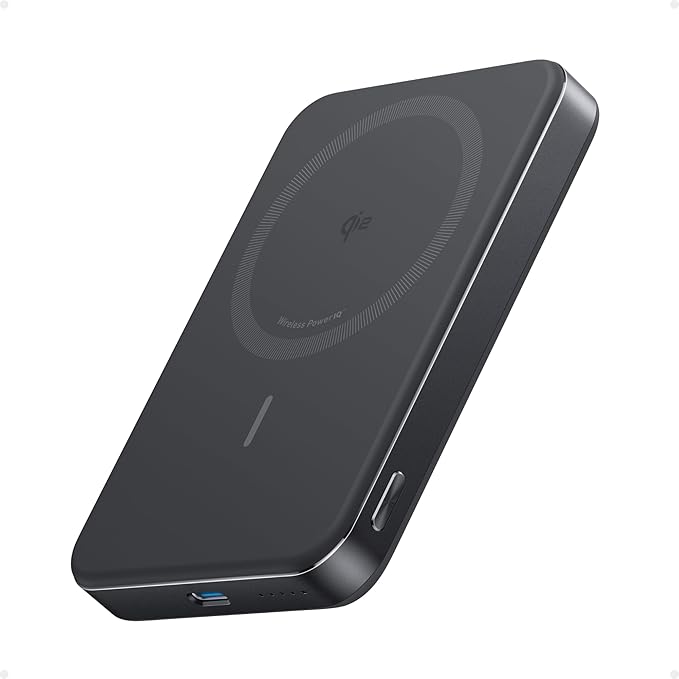
For an existing compatible magnetic-phone routine where attached charging is useful before a forecast day, not as an emergency-alert device
Anker MagGo Power Bank, 10,000mAh Qi2
$69.99 $79.99
Do not use the wrong device for the wrong job
- Official alerts: use official local weather and emergency sources for your location.
- Indoor leak detection: treat it as a home plumbing-risk tool, not a weather-warning system.
- Phone backup: treat it as a maintained consumer accessory for an existing phone and cable routine.
- Immediate danger: follow local authorities; this page is not emergency instruction for a particular address.
FAQ
- Q: What does a flood watch mean?
A: The NWS says flooding is possible. Monitor official forecasts and alerts for your location and be ready to act if conditions change. - Q: Can a water-leak sensor warn me about a flood watch?
A: No. It can serve an indoor plumbing-leak role but is not an official flood-warning source. - Q: Is a power bank flood-preparedness equipment?
A: No. It is a phone-power accessory. It cannot replace official alerts, local directions, evacuation planning, or safety decisions.