
A 3-way lamp smart plug can schedule outlet power, but it cannot choose low, medium, or high. For a reliable bedside routine, first choose the brightness the lamp should return to, leave the lamp base on that setting, and let the plug control only on/off timing.
Quick answer
Use a smart plug when a three-way lamp already has one useful brightness and the missing job is simple timing or remote outlet control. Use a smart bulb when the light needs to change brightness or color from one evening to another. Do not make a plug and a smart bulb compete for the same lamp’s power path, and do not treat a normal plug as a dimmer.
What each control layer actually changes
| Question | Smart plug | Smart bulb |
|---|---|---|
| Can it restore the lamp at a chosen three-way setting? | Yes, if the lamp base is left on at that chosen setting. | Only when the lamp socket keeps supplying power and the selected bulb setup is compatible. |
| Can it choose low, medium, or high on the lamp’s own switch? | No. It controls outlet power, not the internal three-way switch. | It can control its own listed brightness path, not the lamp’s mechanical switch positions. |
| Can it change color or brightness night by night? | No. A normal plug is on/off control. | That is the reason to consider a compatible smart bulb. |
| What happens if someone turns the lamp base off? | The scheduled plug may be on while the lamp remains dark. | The bulb needs uninterrupted socket power to remain available. |
Set up a three-way lamp in this order
- Choose the brightness you want the lamp to restore: for example, a low bedside setting or a brighter reading setting.
- Set the lamp’s own three-way switch to that position and test it directly from the outlet.
- Choose one control layer. A plug owns routine on/off power; a bulb owns the light output.
- Test the bedside manual fallback before creating more than one schedule.
3-way lamp smart plug: two control paths to inspect
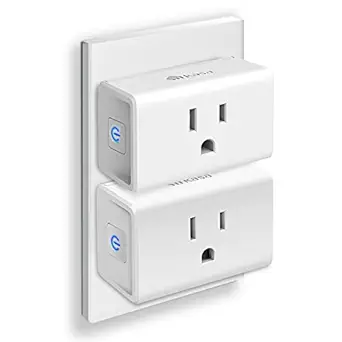
Use this path when the lamp can stay at one chosen brightness and the missing control is only scheduled or remote outlet power
Kasa EP10P2 Smart Plug (2-Pack)
$13.95

Use this path when the light itself must change brightness or color and an Alexa-only, 2.4GHz Wi-Fi setup is acceptable
Amazon Basics Smart A19 Color-Changing Bulb
$11.19
Disclosure: As an Amazon Associate I may earn from qualifying purchases. Prices, stock, and delivery terms can change — please confirm the current details on Amazon before ordering.
Keep the operating rule visible
The selected Kasa listing describes 2.4GHz Wi-Fi, timer/scheduling, and app or supported voice-assistant on/off control. The selected Amazon Basics bulb listing says it works exclusively with Alexa, uses 2.4GHz Wi-Fi, and offers app/voice brightness and color control; its listing says it is not compatible with a physical dimmer. These are selected-listing facts, not a promise about every lamp or room. Check the current Amazon page and the lamp’s own instructions before purchase.
Two failures this prevents
- “The schedule ran but the lamp stayed dark.” The lamp base has probably been switched off. A plug cannot restore a mechanical switch position.
- “The smart bulb disappeared.” A plug or wall switch may have cut the socket’s power. Do not assign two independent control layers to the same power path.
FAQ
- Q: Will a smart plug dim a three-way lamp?
A: No. A normal smart plug controls outlet power only. Leave the lamp at the brightness you want it to restore, or use a compatible bulb when changing light level is the actual job. - Q: Can I control each bulb in a multi-bulb lamp separately with one plug?
A: No. One ordinary plug controls power to the entire lamp. Independent bulb control requires an appropriate separate control path for each bulb. - Q: What should I use a smart plug for in this setup?
A: Use it for a simple plug-in lamp with a stable chosen brightness and a clear on/off routine. Do not use this page as electrical-load advice for heaters or other high-load appliances.